
HVAC Equipment Supply & Installation
The supply, installation, and Annual Maintenance Contract (AMC) of HVAC (Heating, Ventilation, and Air Conditioning) equipment involves a range of services to ensure that HVAC systems are efficiently installed, maintained, and repaired as needed over time. Here’s a breakdown of each phase:
1. Supply of HVAC Equipment
This phase involves sourcing and providing the necessary HVAC equipment for the project.
The types of HVAC systems could include:
- Central Air Conditioning Systems
- Ductless Split Systems
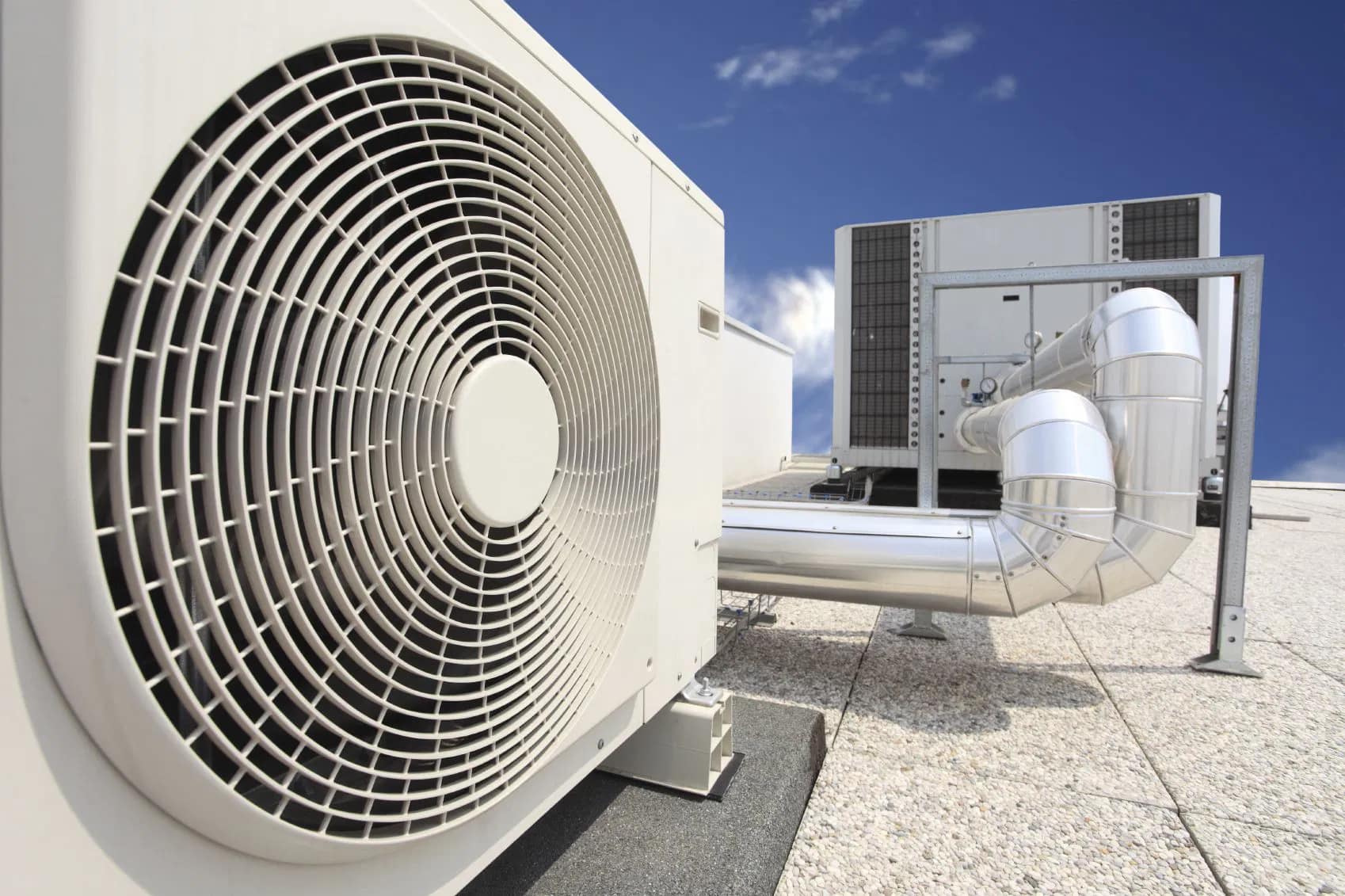
- Chillers (Air-cooled, Water-cooled)
- Air Handling Units (AHUs)
- Ventilation Systems (including Exhaust Fans)
- Heat Pumps
- Thermostats and Controls
Key steps involved in the supply:
- Identifying the right capacity and type of system based on space and usage needs.
- Sourcing reliable, energy-efficient, and durable equipment from reputable manufacturers.
- Ensuring compliance with local and international standards (e.g., energy efficiency ratings, safety standards).
2. Installation of HVAC Equipment
Installation involves setting up the HVAC systems at the designated site and ensuring they are operational and meet the performance criteria. The steps involved are:
- Site Assessment & Survey: An initial survey is done to evaluate space, air flow requirements, insulation, electrical power needs, and any other logistical factors.
- Design & Planning: Proper planning of duct layouts, placement of indoor and outdoor units, power supply, and controls to maximize efficiency.
- Ducting & Piping: Installing the necessary ductwork, refrigerant piping, and electrical wiring.
- System Integration: Setting up air distribution, connecting ventilation systems, connecting the units to power and control systems.
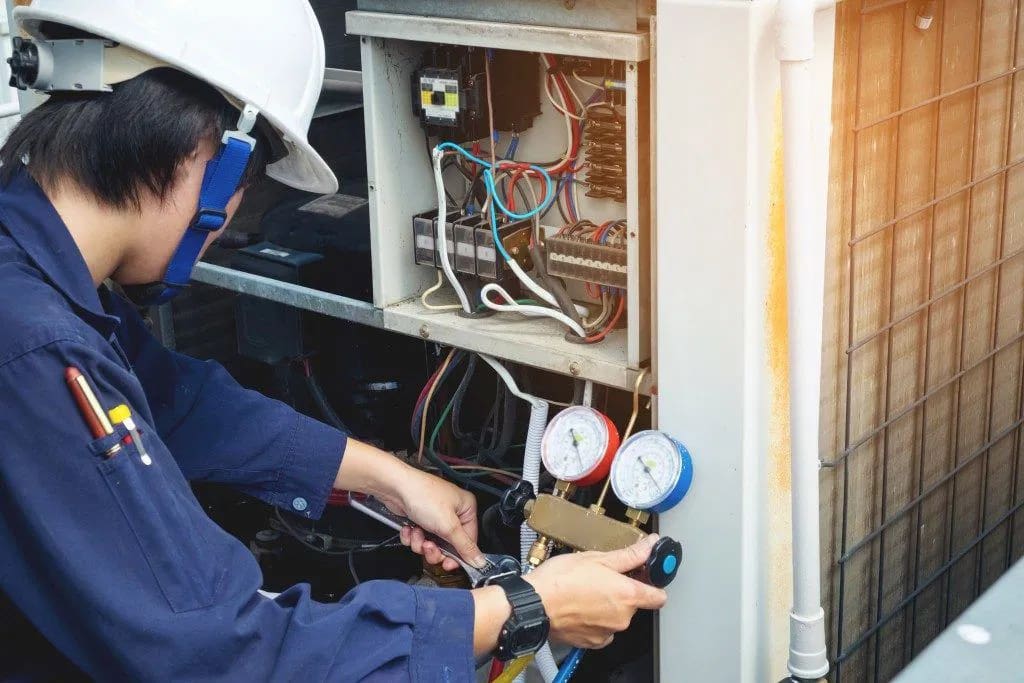
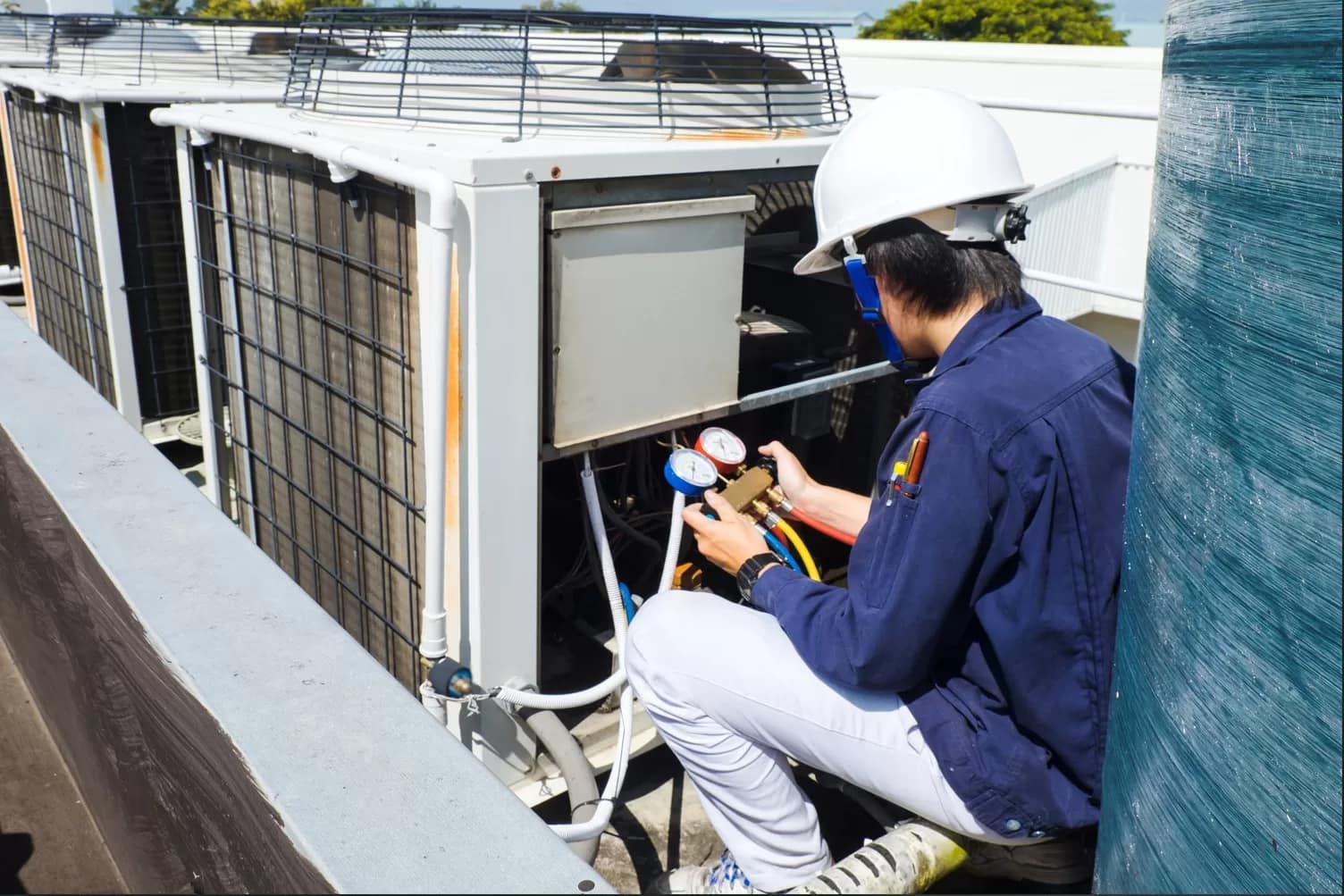
- Testing & Commissioning: After installation, the system is tested for performance, leaks, airflow, and energy efficiency. Calibration of thermostats, sensors, and controllers is also done at this stage.
3. Annual Maintenance Contract (AMC) for HVAC Systems
An AMC ensures the smooth operation of HVAC systems over the long term by providing periodic maintenance, troubleshooting, and repairs when necessary. Typical services under an AMC include:
- Preventive Maintenance: Regular checks to clean filters, coils, evaporators, and condensers; lubricating motors and fans; checking refrigerant levels; and verifying system performance.
- Routine Inspection & Calibration: Regular inspection to detect early signs of wear and tear. Calibration of sensors, thermostats, and other components for optimal efficiency.
- Repairs & Replacement of Parts: During the AMC period, any damaged or faulty components like compressors, motors, or refrigerant lines will be repaired or replaced.
- Emergency Services:Some AMCs include emergency repair services within a certain time frame, ensuring the system is restored quickly in case of breakdowns.
- System Optimization: Over time, adjustments may be made to improve the system’s performance and energy efficiency, including updates to controls or settings.